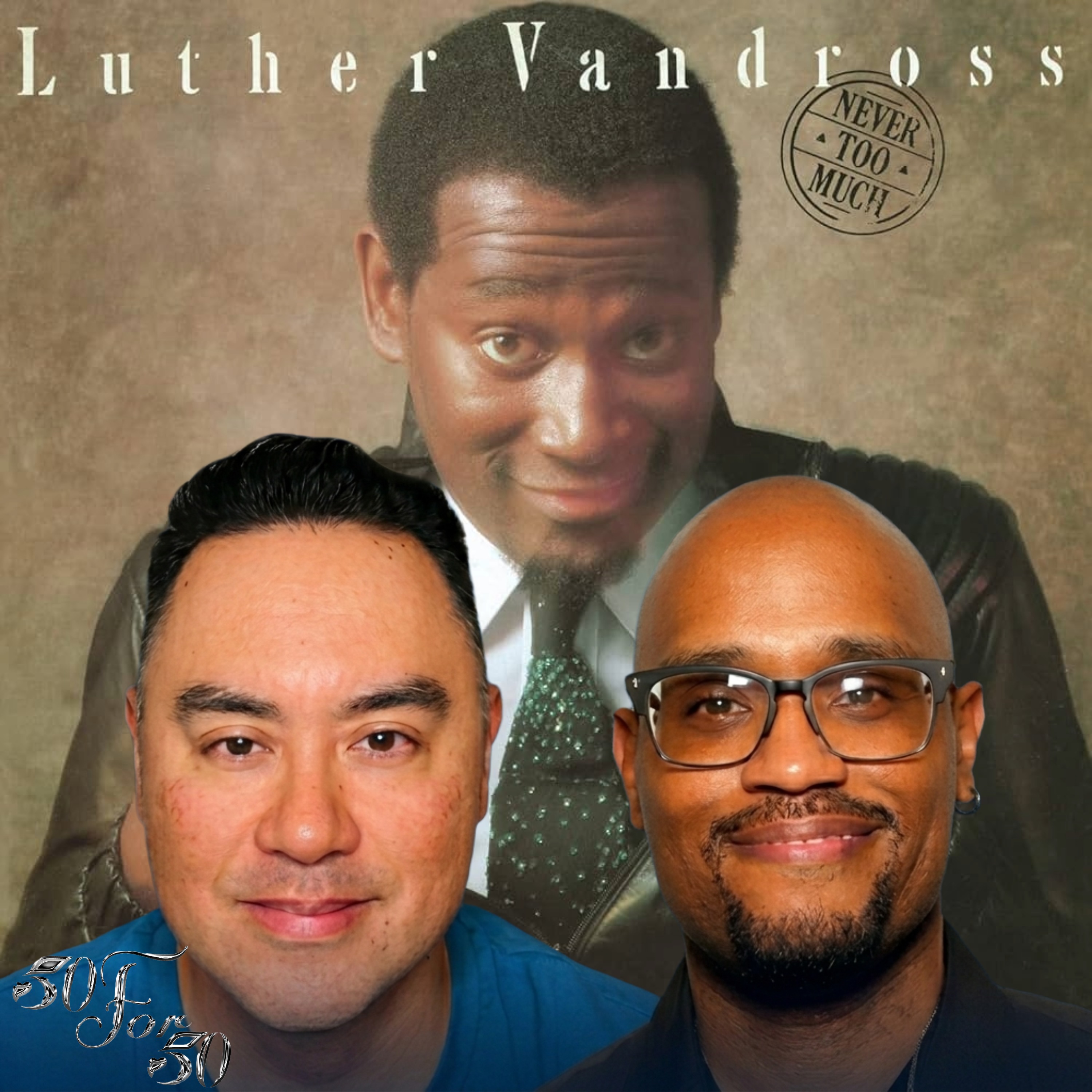
Already a Legend: Luther Vandross' Never Too Much
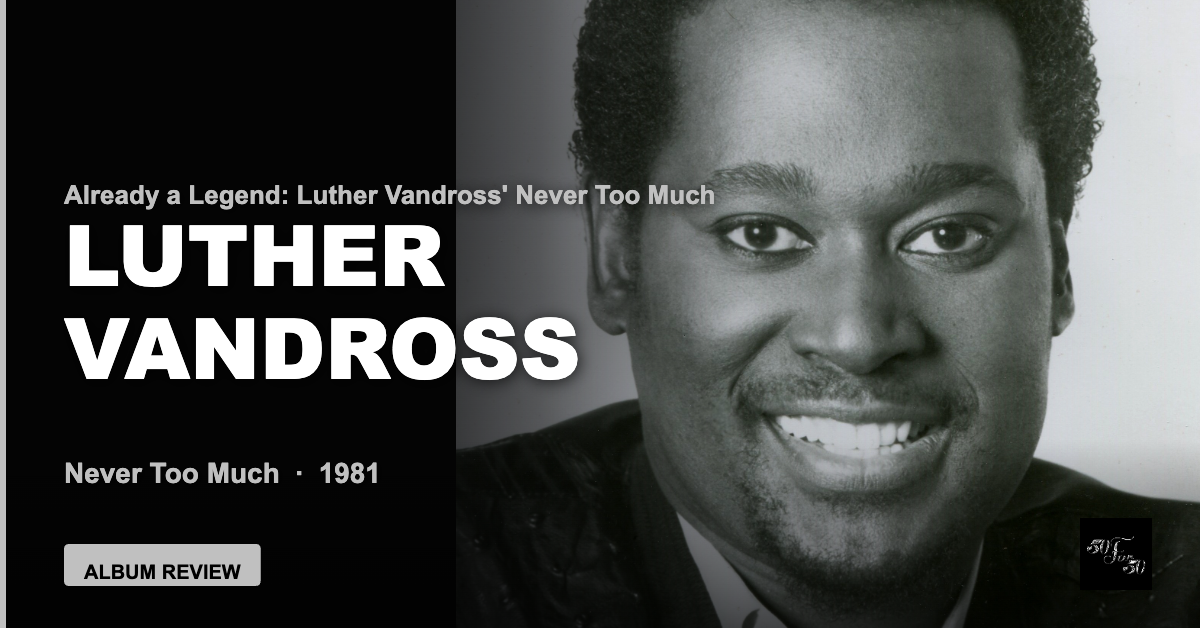
Before Luther Vandross became the legend we now know him as, he was already a superstar. In the decade or so prior to the release of 1981’s Never Too Much, the NYC-based singer/songwriter had already performed alongside the likes of David Bowie and Bette Midler, was well-regarded as the singer of nationally aired TV and radio jingles, and his voice was prominent on some of the biggest hits of the disco era. Chic’s “Le Freak,” Sister Sledge’s “He’s the Greatest Dancer” and Irene Cara’s “Fame” all benefitted from Luther’s buttery croon and his talents as a vocal arranger and background singer. He’d even released two albums in the mid Seventies with a group called “Luther” that received little notice.
So even though Never Too Much may have seemed like a revelation to listeners at the time, Luther had already laid tons of groundwork for his official breakthrough. The album sounds accomplished (maybe also due to the fact that Luther was an ancient-for-the-music-industry 30-years-old at the time of the album’s release).
What did R&B music sound like in 1981? There was a distinct crossover, easy listening sound (think: Lionel Richie). The disco era (which Luther’s voice was a prominent component of) had ended and was replaced (in major metropolitan areas) with what would later be termed boogie (as typified by acts like Shalamar, The Whispers, and Evelyn “Champagne” King). There was also hard-funk in the vein of Rick James or Prince. Luther’s music didn’t fit cleanly into any of those sub-genres.
If I could compare Never Too Much to any of Luther’s contemporaries at the time, it would be George Benson. Like most of Benson’s hits, the songs on Luther’s solo debut have jazzy underpinnings, with more guitar than the remainder of his catalog. “Don’t You Know That?” in particular, feels like it could’ve been lifted straight off of Benson’s Give Me The Night album. Even Never Too Much’s legendary title track is a little Benson-ian, although it’s certainly “Lutherized” by virtue of the starry-eyed lyrics and Vandross’s rapid-fire delivery, which calls to mind the speed-singing/rapping hybrid artists like (Luther’s future duet partner) Beyoncé perfected two decades later.
Most of Luther’s debut follows the template set by the title track. “She’s a Super Lady” and “Sugar and Spice (I Found Me A Girl)” feel like the first cousins of “Never Too Much.” It’s hard to say whether the similarity between songs is adherence to formula or Luther establishing a signature sound. Since it’s his (sort of) debut, let’s give him the benefit of the doubt and call it establishing a signature. However, the one outlying song turned out to be the one that really established a signature sound for the vocalist. Burt Bacharach and Hal David’s “A House Is Not A Home” (popularized by Dionne Warwick) is given a complete restructuring by Luther. It’s stretched out to seven minutes, given a sumptuous arrangement, and Luther renders the song exquisitely, bringing out a melancholy that would become a hallmark of his most highly regarded work. It was the first of what would be many examples of Luther taking a song that belonged to someone else and making it his own, establishing him as the premier song interpreter of his generation (and perhaps ever).
Never Too Much isn’t the crown jewel of Luther’s catalog, but it’s an incredibly accomplished debut (which isn’t really a debut at all). The title track became an era-defining chart topper and set Luther on a barely-precedented streak of Platinum success that lasted for nearly two straight decades after. By the time 1981 came to a close, it was hard to think of Luther as being anyone’s jingle singer or vocal arranger.

Author and Podcaster
Mike Joseph has been a music obsessive almost his whole life. The New York native was honored by Billboard Magazine in 2020 as a "Pride Power Player", celebrating a career in the music industry that's lasted over three decades. Mike has also worked as a music journalist, a radio announcer, and since 2020 has produced and hosted the podcast "Detoxicity", which shines a light on men's mental health.

Brandy's Biggest Hits: The Playlist That Reminds You Why She Was Everything